DOT vs Non-DOT Drug Testing: What HR Must Know to Stay Compliant
DOT vs Non-DOT Drug Testing: Understanding the Key Differences for HR Professionals
Drug testing remains a critical part of workplace safety, risk management, and regulatory compliance. However, many HR professionals are unsure about the differences between DOT and Non-DOT drug testing programs and how each applies to their workforce.
Failing to understand these distinctions can expose employers to compliance violations, legal risks, workplace accidents, and costly hiring mistakes.
Whether you’re managing a transportation company, staffing agency, manufacturing facility, healthcare organization, or corporate office, understanding the requirements of DOT and Non-DOT testing is essential.
This guide explains the major differences between DOT and Non-DOT drug testing, compliance requirements, testing procedures, and best practices HR departments should follow to maintain a safe and compliant workplace.
What Is DOT Drug Testing?
DOT drug testing refers to drug and alcohol testing regulated by the U.S. Department of Transportation (DOT).
Federal regulations require employees performing safety-sensitive transportation duties to participate in specific drug and alcohol testing programs.
DOT regulations apply to workers covered under agencies such as:
- Federal Motor Carrier Safety Administration (FMCSA)
- Federal Aviation Administration (FAA)
- Federal Railroad Administration (FRA)
- Federal Transit Administration (FTA)
- Pipeline and Hazardous Materials Safety Administration (PHMSA)
- United States Coast Guard (USCG)
Employees subject to DOT testing include:
- Commercial truck drivers
- Bus drivers
- Airline personnel
- Railroad employees
- Pipeline workers
- Maritime transportation workers
DOT drug testing is governed by strict federal regulations outlined in 49 CFR Part 40.
What Is Non-DOT Drug Testing?
Non-DOT drug testing refers to workplace drug testing programs that are not regulated by the Department of Transportation.
Employers use Non-DOT testing to:
- Screen job applicants
- Promote workplace safety
- Reduce workers’ compensation claims
- Meet company policies
- Comply with state-specific regulations
- Support drug-free workplace programs
Industries commonly using Non-DOT testing include:
- Manufacturing
- Construction
- Healthcare
- Staffing and recruiting
- Retail
- Warehousing
- Technology
- Financial services
- Energy
- Hospitality
Unlike DOT testing, Non-DOT programs provide employers with greater flexibility regarding testing panels, testing methods, and company policies.
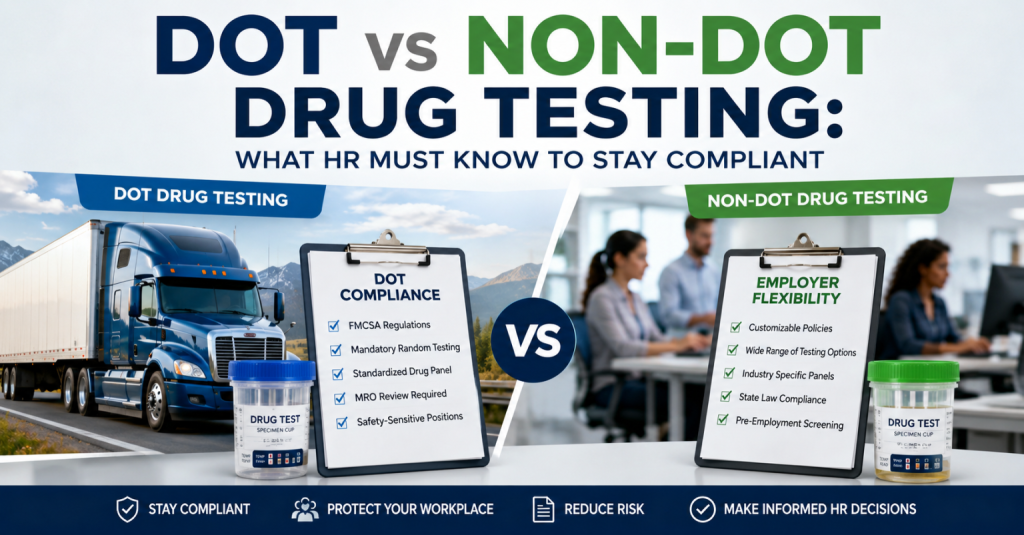
DOT vs Non-DOT Drug Testing: Major Differences
1. Regulatory Oversight
The most significant difference is who regulates the testing program.
DOT Testing
- Governed by federal regulations
- Strict procedures must be followed
- Standardized collection process
- Specific testing requirements
Non-DOT Testing
- Governed by employer policies
- Subject to state laws
- Greater flexibility in program design
- Employer chooses testing protocols
For HR professionals, understanding which regulations apply is the first step toward compliance.
2. Who Must Be Tested
DOT testing only applies to employees in federally regulated safety-sensitive positions.
Examples include:
- CDL drivers
- Transit operators
- Pilots
- Railroad conductors
- Pipeline operators
Non-DOT testing may be applied to:
- Applicants
- Office employees
- Warehouse staff
- Healthcare workers
- Manufacturing personnel
- Temporary workers
HR teams should carefully identify which positions are DOT-covered and which fall under company Non-DOT policies.
3. Drug Panels Tested
DOT testing requires a standardized drug panel established by federal guidelines.
The DOT drug test typically screens for:
- Marijuana (THC)
- Cocaine
- Amphetamines
- Opioids (including certain semi-synthetic opioids)
- Phencyclidine (PCP)
Employers cannot modify DOT-required panels.
Non-DOT testing offers flexibility.
Common Non-DOT testing options include:
- 5 Panel Drug Test
- 10 Panel Drug Test
- 12 Panel Drug Test
- 14 Panel Drug Test
- Custom employer panels
Organizations may choose expanded testing that includes:
- Benzodiazepines
- Barbiturates
- Methadone
- Oxycodone
- Hydrocodone
- Synthetic opioids
- Additional prescription medications
This flexibility allows employers to align testing with workplace risks.
4. Alcohol Testing Requirements
DOT programs require alcohol testing under specific circumstances.
These include:
- Post-accident testing
- Reasonable suspicion testing
- Random testing
- Return-to-duty testing
- Follow-up testing
Alcohol testing must follow DOT-approved procedures.
Non-DOT alcohol testing is generally optional and determined by employer policy.
5. Random Testing Requirements
Random testing is mandatory for many DOT-regulated employers.
Employees must be selected using a scientifically valid random selection process.
Federal agencies establish annual testing rates that employers must meet.
For Non-DOT programs:
- Random testing may be implemented voluntarily
- Requirements vary by state
- Employers determine testing frequency
HR departments should verify whether their workforce falls under DOT random testing requirements.
6. Medical Review Officer (MRO) Process
DOT testing requires review by a certified Medical Review Officer (MRO).
The MRO:
- Reviews laboratory results
- Contacts donors when necessary
- Verifies legitimate prescriptions
- Determines final test outcomes
While MRO review is mandatory for DOT programs, many employers also use MRO services for Non-DOT testing to improve consistency and reduce legal risks.
Types of Drug Testing Used in DOT and Non-DOT Programs
Urine Drug Testing
Urine testing remains the most widely used option for both DOT and Non-DOT programs.
Benefits include:
- Federal acceptance
- Extensive drug detection capabilities
- Cost-effectiveness
- Established laboratory procedures
DOT testing primarily relies on laboratory-based urine testing.
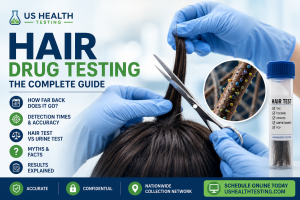
Hair Drug Testing
Hair testing is commonly used in Non-DOT programs.
Advantages include:
- Longer detection window
- Difficult to adulterate
- Effective for pre-employment screening
Hair testing can identify drug use patterns that occurred over approximately 90 days.
Oral Fluid Drug Testing
Oral fluid testing continues to gain popularity.
Benefits include:
- Observed collections
- Reduced cheating opportunities
- Convenient collection process
- Detection of recent drug use
Many employers are incorporating oral fluid testing into their workplace programs.
When HR Should Conduct Drug Testing
Both DOT and Non-DOT programs may involve several testing events.
Pre-Employment Testing
Conducted before hiring candidates into designated positions.
Benefits include:
- Reduced hiring risks
- Improved workplace safety
- Enhanced compliance
Random Testing
Used to deter workplace substance abuse and maintain ongoing compliance.
Reasonable Suspicion Testing
Triggered when supervisors observe signs of potential drug or alcohol use.
Indicators may include:
- Slurred speech
- Impaired coordination
- Unusual behavior
- Safety concerns
Proper supervisor training is essential.
Post-Accident Testing
Performed following workplace incidents or accidents.
These tests may help:
- Support investigations
- Meet regulatory requirements
- Determine contributing factors
Return-to-Duty and Follow-Up Testing
Common in DOT programs after policy violations.
These tests help verify compliance before employees resume safety-sensitive duties.
Common Compliance Mistakes HR Should Avoid
Misclassifying Employees
One of the most common errors is treating DOT-covered employees as Non-DOT workers.
This can result in regulatory violations and significant penalties.
Using the Wrong Testing Panel
DOT-covered employees must receive DOT-compliant testing.
Substituting a Non-DOT panel may invalidate compliance efforts.
Ignoring State Laws
For Non-DOT programs, employers must comply with applicable state regulations.
State laws may address:
- Marijuana policies
- Employee notifications
- Testing procedures
- Adverse action requirements
HR professionals should regularly review changing state regulations.
Poor Documentation
Incomplete documentation can create liability during audits or legal disputes.
Maintain records for:
- Test orders
- Chain of custody forms
- Results
- Policy acknowledgments
- Training records
Lack of Written Policies
Every organization should maintain a clearly written drug testing policy outlining:
- Who is tested
- When testing occurs
- Consequences of positive results
- Employee rights
- Appeals processes
How US Health Testing Helps Employers Stay Compliant
Managing drug testing across multiple locations can be challenging, particularly for organizations with large or distributed workforces.
US Health Testing helps employers streamline workplace drug testing through:
- Nationwide testing coverage
- Access to 25,000+ collection sites
- DOT and Non-DOT testing programs
- Urine, hair, and oral fluid testing
- Employer drug testing management solutions
- Random testing program support
- Fast laboratory reporting
- Centralized scheduling and results management
For HR departments, staffing agencies, and safety-sensitive employers, having a trusted testing partner can significantly reduce administrative burden while supporting compliance objectives.
Choosing the Right Drug Testing Program
The right testing program depends on your industry, workforce, and regulatory obligations.
Generally:
- DOT-covered employers must follow federal DOT regulations.
- Non-DOT employers should develop customized testing programs aligned with company policy and state law.
- Organizations operating both DOT and Non-DOT workforces must clearly separate testing requirements for each group.
HR leaders who understand these distinctions are better positioned to protect employees, reduce risk, and maintain compliance.
Final Thoughts
Understanding the difference between DOT and Non-DOT drug testing is essential for modern HR and compliance professionals.
While DOT programs follow strict federal requirements for safety-sensitive transportation employees, Non-DOT programs offer flexibility for employers seeking safer, more productive workplaces.
By implementing the correct testing procedures, maintaining proper documentation, and partnering with experienced providers such as US Health Testing, organizations can reduce compliance risks while supporting workplace safety and operational excellence.
As workplace regulations continue to evolve, HR professionals who stay informed about DOT and Non-DOT testing requirements will be better equipped to protect their organizations and build effective, compliant drug-free workplace programs.