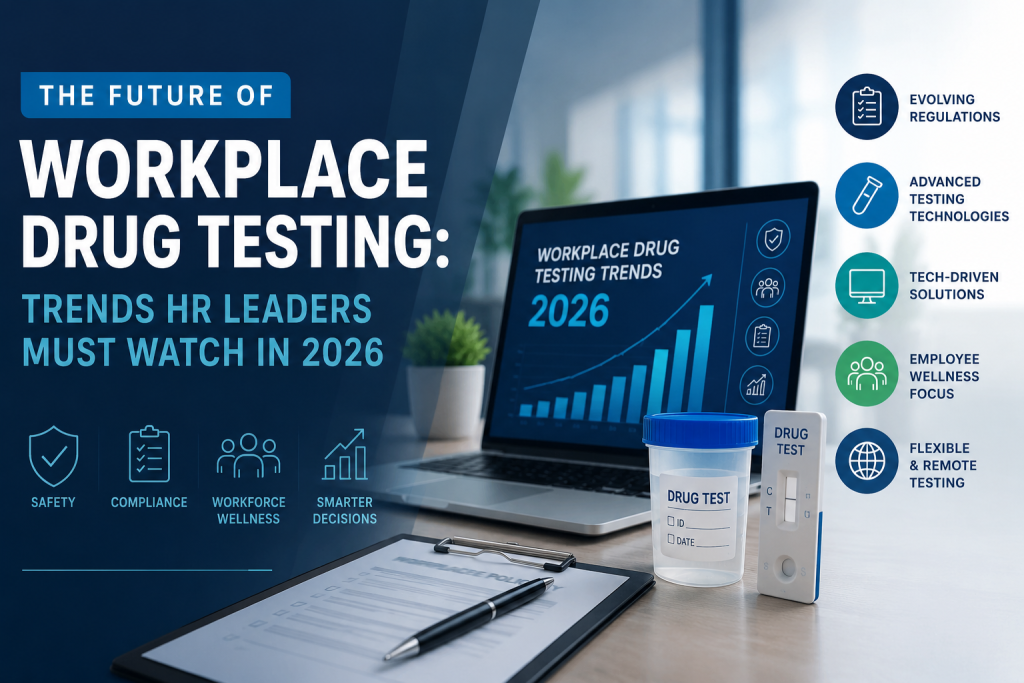
The Future of Workplace Drug Testing: Trends HR Leaders Must Watch in 2026
Introduction
Workplace drug testing continues to evolve as employers face new challenges related to workforce safety, compliance, remote work, changing state laws, and emerging substance use trends. As we move through 2026, Human Resources professionals must stay informed about the latest developments shaping workplace drug testing programs.
Organizations that fail to adapt may expose themselves to increased safety risks, legal liabilities, and hiring challenges. On the other hand, employers that embrace modern drug testing strategies can strengthen workplace safety, improve hiring outcomes, maintain regulatory compliance, and build trust among employees.
In this article, we’ll explore the most important workplace drug testing trends HR leaders should watch in 2026 and how companies can prepare for the future.
Why Workplace Drug Testing Remains Important
Despite evolving attitudes toward certain substances, workplace drug testing remains a critical component of risk management for many employers.
Drug testing programs help organizations:
- Promote workplace safety
- Reduce accidents and injuries
- Support compliance with federal and industry regulations
- Protect company reputation
- Improve productivity
- Reduce absenteeism and turnover
- Maintain safe work environments for employees and customers
For safety-sensitive industries such as transportation, construction, manufacturing, healthcare, and logistics, drug testing continues to be an essential workplace safeguard.
Trend #1: Increased Focus on Safety-Sensitive Positions
One of the biggest workplace drug testing trends in 2026 is the continued emphasis on safety-sensitive job roles.
While some employers are reducing testing requirements for certain office-based positions, organizations are strengthening testing protocols for employees whose work directly impacts public or workplace safety.
Examples of safety-sensitive positions include:
- Commercial drivers
- Heavy equipment operators
- Healthcare workers
- Utility employees
- Aviation personnel
- Manufacturing workers
- Warehouse equipment operators
HR leaders are increasingly adopting risk-based testing strategies rather than applying identical testing requirements across all positions.
This targeted approach helps employers balance workplace safety needs with modern recruitment challenges.
Trend #2: Marijuana Policy Adjustments Continue
The growing number of states with legalized medical or recreational marijuana continues to create compliance challenges for employers.
In 2026, HR departments must carefully navigate:
- State-specific marijuana employment laws
- Drug testing restrictions
- Disability accommodation requirements
- Off-duty conduct protections
- Safety-sensitive job exemptions
Many employers are updating their policies to distinguish between marijuana use and workplace impairment.
Since traditional drug tests typically detect past use rather than current impairment, organizations are reviewing their testing programs to ensure policies remain legally defensible while protecting workplace safety.
For multi-state employers, policy consistency and legal compliance have become more complex than ever.
Trend #3: Growth of Oral Fluid Drug Testing
Oral fluid drug testing is gaining significant momentum in 2026.
Employers are increasingly considering oral fluid testing because it offers several advantages:
Benefits of Oral Fluid Testing
- Easier collection process
- Direct observation reduces tampering risks
- Faster collection times
- Shorter detection window
- Improved recent-use detection
- Convenient testing environments
For post-accident and reasonable suspicion testing, oral fluid testing may provide more relevant insights into recent substance use compared to traditional urine testing.
As federal agencies continue expanding acceptance of oral fluid testing methods, more employers are expected to adopt this alternative collection option.
Trend #4: Technology-Driven Drug Testing Programs
Technology is transforming nearly every aspect of workplace drug testing.
Modern employers are increasingly using digital solutions for:
- Test ordering
- Candidate scheduling
- Electronic chain of custody forms
- Result reporting
- Compliance documentation
- Random testing program management
Automation reduces administrative burdens on HR teams while improving efficiency and recordkeeping accuracy.
Companies that embrace digital drug testing workflows can often streamline hiring processes and improve candidate experiences.
Trend #5: Remote Workforce Testing Solutions
Although many organizations have returned employees to physical workplaces, remote and hybrid work arrangements remain common.
This has created new challenges for workplace drug testing programs.
HR leaders are adopting more flexible testing solutions that accommodate geographically dispersed employees, including:
- Nationwide collection networks
- Electronic authorization forms
- Online scheduling systems
- Mobile collection options in certain situations
- Centralized reporting platforms
Employers need testing partners capable of supporting employees regardless of location while maintaining compliance and confidentiality.
Trend #6: Greater Use of Continuous Compliance Monitoring
Many regulated industries are moving beyond one-time pre-employment testing.
In 2026, employers are placing greater emphasis on ongoing compliance strategies that include:
- Random drug testing
- Post-accident testing
- Reasonable suspicion testing
- Return-to-duty testing
- Follow-up testing
This comprehensive approach helps organizations maintain safer workplaces throughout the employee lifecycle rather than focusing solely on hiring-stage screening.
For DOT-regulated employers, continuous compliance monitoring remains a critical regulatory requirement.
Trend #7: Data-Driven Workforce Risk Management
HR leaders are increasingly using workforce data to guide drug testing decisions.
Organizations are analyzing trends such as:
- Accident rates
- Workers’ compensation claims
- Turnover patterns
- Absenteeism data
- Positive test rates
- Safety incident reports
These insights help employers identify areas where drug testing programs may improve workplace safety outcomes.
Data-driven decision-making allows HR departments to allocate resources more effectively while demonstrating the value of workplace testing initiatives.
Trend #8: Expanded Employee Education Programs
Forward-thinking employers recognize that workplace drug testing is only one component of a broader substance abuse prevention strategy.
Many organizations are investing more heavily in:
- Employee wellness programs
- Substance abuse awareness training
- Supervisor education
- Mental health support services
- Employee assistance programs (EAPs)
The goal is to address potential issues proactively rather than relying solely on testing programs.
HR leaders increasingly view drug testing as part of a comprehensive workplace health and safety framework.
Trend #9: Enhanced Compliance Requirements
Regulatory compliance remains one of the most important considerations for HR professionals.
In 2026, employers must stay current with:
- Federal regulations
- State drug testing laws
- Industry-specific requirements
- DOT testing mandates
- Privacy regulations
- Employment discrimination considerations
Because laws continue to evolve, organizations should regularly review their policies and procedures to ensure compliance.
Partnering with experienced testing providers can help employers navigate complex regulatory requirements more effectively.
Trend #10: Improved Candidate Experience
Today’s labor market remains competitive, and employers are working to improve every aspect of the hiring process.
Drug testing programs are becoming more candidate-friendly through:
- Faster scheduling options
- Convenient testing locations
- Electronic documentation
- Mobile notifications
- Faster result reporting
A positive testing experience can contribute to a stronger employer brand while reducing hiring delays.
HR teams recognize that lengthy or complicated testing procedures may negatively impact candidate satisfaction and recruitment outcomes.
The Role of Artificial Intelligence in Workplace Drug Testing
Artificial intelligence is beginning to influence workforce compliance management in several ways.
Emerging applications include:
- Compliance tracking
- Automated reporting
- Scheduling optimization
- Risk analysis
- Workforce trend identification
While AI is not replacing laboratory testing, it is helping HR professionals manage testing programs more efficiently and make better-informed decisions.
As AI technology continues to mature, employers can expect further innovations in compliance and workforce management solutions.
How Employers Can Prepare for the Future
To stay ahead of workplace drug testing trends in 2026, HR leaders should:
Review Existing Policies
Ensure workplace drug testing policies reflect current laws, regulations, and organizational needs.
Evaluate Testing Methods
Consider whether urine, oral fluid, or other testing methods best support company objectives.
Invest in Technology
Adopt digital solutions that improve efficiency and compliance management.
Train Supervisors
Provide education on reasonable suspicion recognition and workplace impairment concerns.
Monitor Legal Developments
Stay informed about evolving marijuana laws and employment regulations.
Partner with Trusted Providers
Work with experienced testing providers that offer nationwide coverage, compliance support, and modern testing solutions.
Why Employers Choose US Health Testing
As workplace drug testing continues to evolve, employers need reliable partners who can help simplify the process.
US Health Testing offers online drug testing services for employment drug testing through a nationwide network of certified collection sites. Employers can conveniently order tests online, manage workplace testing programs, schedule employee testing, and receive confidential results while supporting compliance requirements.
Whether your organization requires pre-employment testing, random drug testing, DOT drug testing, post-accident testing, or ongoing workforce screening, US Health Testing provides flexible solutions designed to meet modern workplace needs.
Conclusion
The future of workplace drug testing is being shaped by technological innovation, changing workforce dynamics, evolving marijuana laws, and increased focus on safety and compliance.
For HR leaders, staying informed about these trends is essential to maintaining effective workplace drug testing programs. Organizations that adapt proactively will be better positioned to reduce risk, improve workplace safety, attract quality talent, and remain compliant in an increasingly complex regulatory environment.
As 2026 progresses, workplace drug testing will continue to evolve—but its role in protecting employees, employers, and communities remains as important as ever.